Housing for victims of LGBTI hate violence within families, more psychological care and legal counsel, and greater resources against discrimination are some of the new measures included in the bill
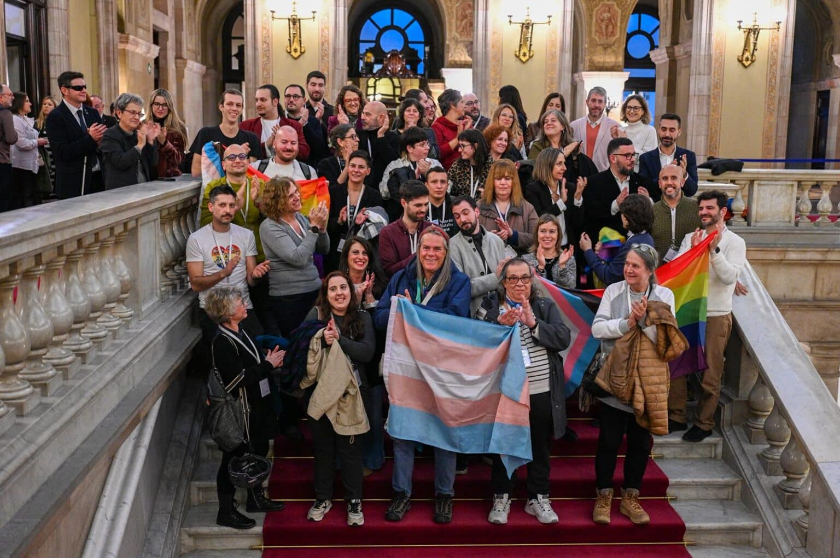
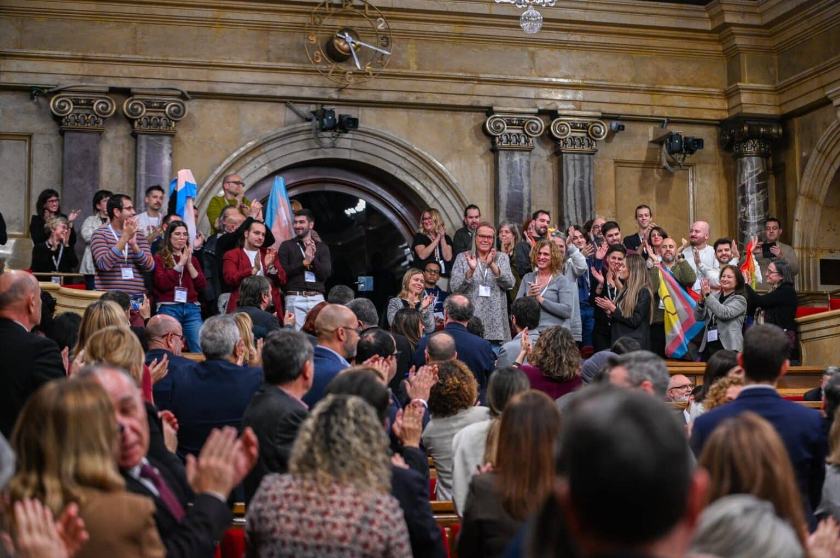
The consolidation and guarantee of LGBTI+ rights took a major leap forward on Wednesday in the Parliament of Catalonia with the passing of the new law on the rights of LGBTI+ people, with 80% of members in favour. “Faced with the rise of fascism and the trivialisation of hate, the Parliament is putting its foot down, saying that in Catalonia human rights are not to be negotiated or downgraded” asserted Esquerra member of parliament and former minister for Equality and Feminism, Tània Verge, praising the passing of the bill.
The law bolsters the administration’s responsibilities regarding prevention and reparation for LGBTI+phobia, with significant measures such as providing housing for people who suffer LGBTI hate violence in the family environment, free legal assistance for situations of violence in the context of intimate partner and sexual violence, and mandatory protocols against LGBTI+phobia in the context of sports.
Faced with the rise of the far right and backsliding of rights, the new law also legally protects actions and services that the former Esquerra and other governments promoted and deployed, thus preventing any attempt to dismantle them. That is the case of the SOCtrans Public Employment Service for trans people or the Health Service Transit Unit, for example.
It also reinforces services that already existed, such as the figures of coordinators for Coeducation, Coexistence and Welfare (COCOBE) at educational centres—which by this law see increased dedication with action for sex education or prevention of LGBTI hate violence—and provides the Comprehensive Care Services Network (SAI) with more personnel and resources so that all centres are able to provide psychological care and legal counsel.
The law also identifies new forms of discrimination and violence, and incorporates and defines them in the sanctions regime to strengthen and update it.
Although in practice the passage of the bill has resulted in a new law, it is in fact based on the 2014 law. The intention was to update the law to expand and protect rights in the face of the global reactionary wave and the new expressions of LGBTI+phobia that have emerged recently. “The law is not a simple update: it is a new phase,” said Ms Verge.
Thus, Esquerra has worked together with socialist PSC, conservative Junts, and left-wing Comuns and CUP on the bill, hand in hand with LGBTI+ entities and groups which had been the promoters of the first law. This time round, these organisations have also played an active and decisive part in the entire process of drafting the bill, which is why on Wednesday they applauded the leap forward that LGBTI+ rights have made in Parliament.