
The republican initiative, which has not passed because of the Spanish right’s votes against and the absence of Catalan conservatives Junts, sought better distribution of work time and improvement of the Catalan working class’s quality of life
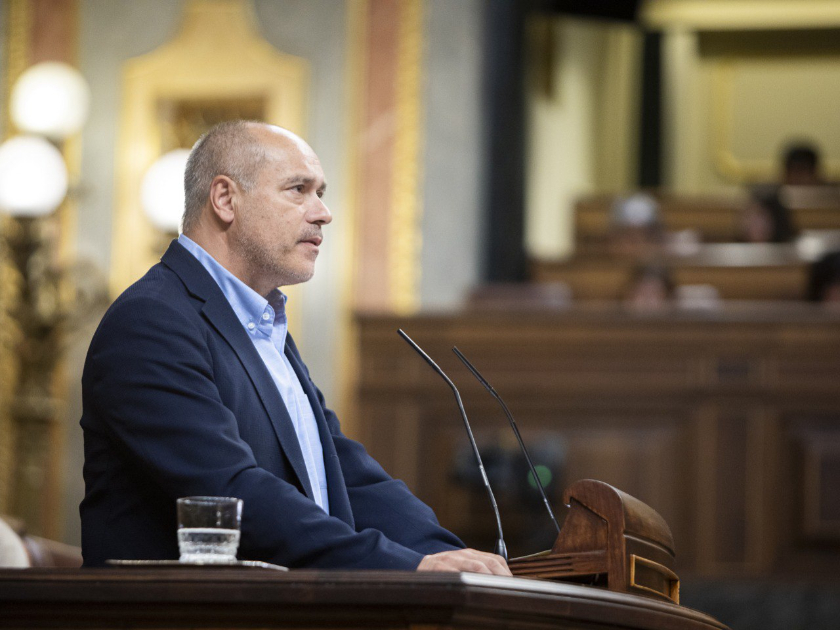
Esquerra Republicana’s group in the Spanish Congress has introduced an initiative urging the Spanish government to implement the necessary legislative measures to reduce working hours without reducing worker’s salaries, in order to achieve better distribution of work time. The initiative did not pass because of the Spanish right’s votes against and the absence of Catalan conservatives Junts in the plenary session, which Esquerra’s congressman Jordi Salvador regretted in his speech, saying that “We have lost a golden opportunity to build a future with a dignified and fair work place for the people.”
In this regard, Mr Salvador made a call to “defy right-wing policies that harm the Catalan and Spanish working classes” because, as he laid out, “excessive working hours not only affects our quality of life, but also our physical and mental health.” He went on to say that “We cannot wait any longer, this must be the legislature for [working] time: It's time to reclaim our lives, reducing the working day is a vital necessity” he said vehemently.
Mr Salvador called on the Spanish government to “commit to the working class and not forget that workers’ gaining control of their own time must be an unassailable goal of the left.” In addition, in his intervention he recalled that “the data are clear and they show that in most cases, a reduction in the working day does not imply reduced productivity,” ensuring that “the motion to reduce the working day to 37.5 hours per week is not only justified, but achievable without affecting the viability of businesses.”
Finally, the motion resulting from the interpellation by Esquerra also calls for appropriate legislative changes to be made to re-establish ordinary retirement age at 65. “If you are not able to set the retirement horizon at 65, the pro-independence and pro-sovereignty left-wing groups will continue to fight for it, alongside pensioners' associations from all over Spain, because it is fair, it is necessary and it is possible,” concluded Mr Salvador.