
The proposal corrects the monolingual bias of state institutions and ensures the effective right of citizens to interact with the administration in any official language.
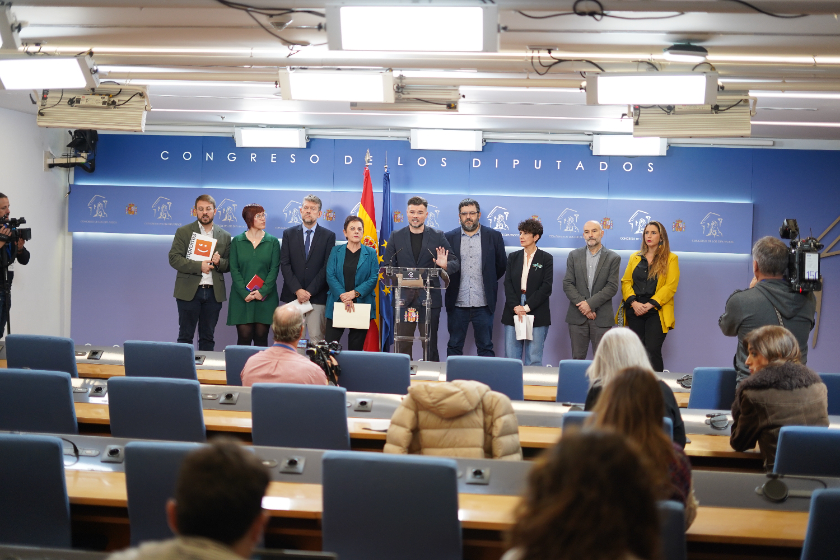
The Esquerra, EH Bildu, EAJ-PNB, Comuns, Compromís, and Més per Mallorca parliamentary groups have introduced a bill for an Organic Law to Guarantee Multilingualism and the Linguistic Rights of Citizens, an ambitious reform that seeks to correct the historical imbalance privileging the Spanish language in the actual workings of state institutions.
The signatories recall that despite constitutional recognition of linguistic diversity, the mandate of article 3.3 safeguarding the different languages continues without being effectively implemented, with persisting norms and practices placing the local languages at a disadvantage.
The bill sets as its core tenet that any citizen may exercise their right to interact with the bodies of Spain’s judiciary, constitutional institutions, and general administration in any of the official languages of the land, availed of full legal validity. To this end, it provides for a clear imperative for language learning in the justice department, the civil service, and in public contracting, and provides the instruments to ensure respect for the citizens’ right to choice of language.
Among the mainstays of the reform are critical requirements for the administration of Justice—such as knowledge of the official language of a territory other than Spanish in order to accede to a post there, or the full validity of judicial documents without having to be translated—as well as the comprehensive adaptation of administrative procedures and digital platforms to all official languages. The bill also includes transversal linguistic criteria in public contracting and regulates key sectoral areas such as consumer rights, security, transport and audiovisual communication, by which the presence and use of official languages other than Spanish is to be significantly reinforced.
Regarding education, the bill establishes that the language of each autonomous community other than Spanish shall normally be the working language, with the aim of guaranteeing that students master both that language and Spanish upon completing basic education. According to the groups introducing the bill, this measure reinforces equal opportunities and certifies balanced linguistic competence throughout the territory.
Finally, the Esquerra, EH Bildu, EAJ-PNB, Comuns, Compromís and Més per Mallorca parliamentary groups emphasise that the bill represents a qualitative leap in the protection of linguistic heritage, guaranteeing rights and progressing from a merely declaratory recognition to an effective, operational and fully respectful multilingualism consistent with the linguistic reality of the State.